Floor & Ceiling Tile
Asbestos Floor & Ceiling Tile Removal in Denver
Identify the tile before it's sanded, pried, or torn out. Get a Free Estimate
Floor & Ceiling Tile
Identify the tile before it's sanded, pried, or torn out. Get a Free Estimate
Two tile products show up again and again in older Denver properties: 9x9 or 12x12 vinyl composition floor tile, and lightweight fibrous ceiling tile, both commonly manufactured with asbestos before the 1980s. Sanding, cutting, or prying either one loose can release fibers, especially during flooring updates or ceiling grid replacement.
Denver Asbestos Abatement tests suspect tile before it's disturbed and plans removal or safe encapsulation around your renovation, whether that's a full floor replacement or a dropped-ceiling update.
9x9 and, less commonly, 12x12 vinyl composition floor tile manufactured before the early 1980s frequently contains asbestos fiber, and so does the black cutback mastic adhesive often used to install it, meaning a floor can test positive even if the visible tile itself doesn't. The same era of construction commonly used fibrous mineral ceiling tile, either glued directly to a substrate or set into a suspended grid system, particularly in basements, offices, and finished lower levels. Because both materials were manufactured products rather than sprayed-on coatings, they're generally non-friable when intact, but sanding, drilling, or forcibly prying them up can release fibers.
A proper tile removal project tests both the tile and the adhesive layer separately, since one can contain asbestos while the other doesn't, and vice versa. Removal typically involves lifting tiles with minimal breakage, then addressing the mastic residue, either by encapsulating it under new flooring or removing it with methods that avoid abrasive sanding, which is one of the more aggressive ways to release fibers from cutback adhesive. Homeowners planning new flooring over old vinyl tile should get both layers tested before demolition day, not after the crew has already started prying up tile.
Floor and ceiling tile are evaluated differently, so we look at both the material and how your project will disturb it.
Older vinyl composition tile, plus the black mastic adhesive underneath, both of which can contain asbestos.
Lightweight 12x12 or 2x4 ceiling tile from dropped-grid systems in basements, offices, and finished spaces.
Original asbestos tile is often left in place under carpet, laminate, or newer vinyl, and surfaces again during a remodel.
Cracked, curling, or crumbling tile where fibers are more likely to release and should be evaluated promptly.
| Service | Estimated Cost | Average |
|---|---|---|
| Testing & sampling | $350–800 | $550 |
| Single room, floor or ceiling | $1,200–3,500 | $2,200 |
| Multiple rooms | $3,000–8,000 | $5,000 |
| Whole-floor or whole-building tile | $8,000–20,000+ | $13,000 |
Cost ranges are general planning estimates and are not guaranteed prices. Tile type, adhesive condition, square footage, and disposal requirements can substantially change the final cost.
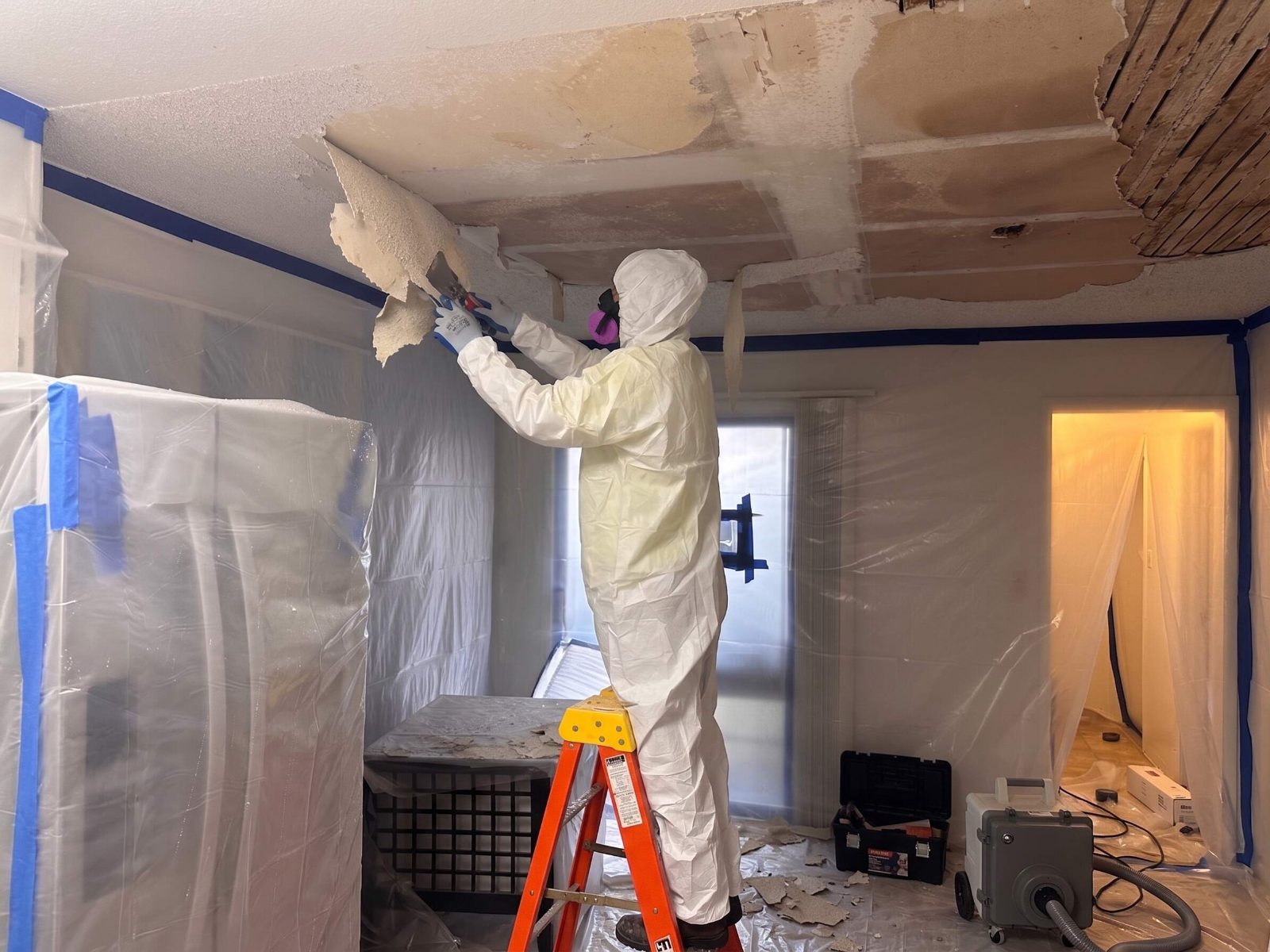
We check the adhesive layer as well as the tile itself, since either can contain asbestos on its own.
We plan removal around your new flooring or ceiling installation timeline.
Tile removal is planned to limit dust in occupied homes and active work areas.
Planning a flooring or ceiling update over older tile? Let's talk through the project. Get a Free Estimate.
Free, no obligations
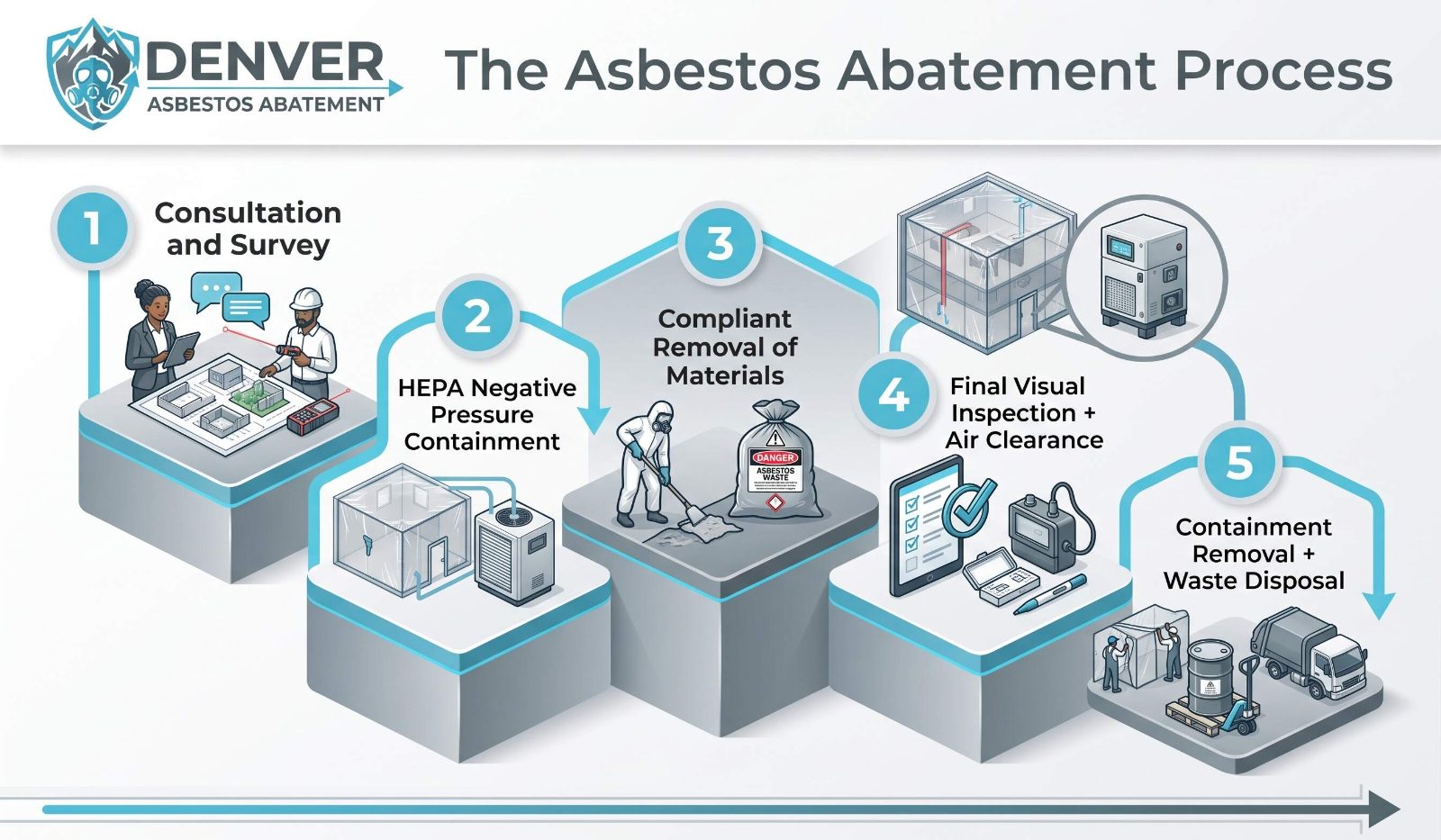
We review the flooring or ceiling material and arrange testing of both the tile and any mastic or adhesive.
We map the affected rooms or ceiling area against your renovation plan.
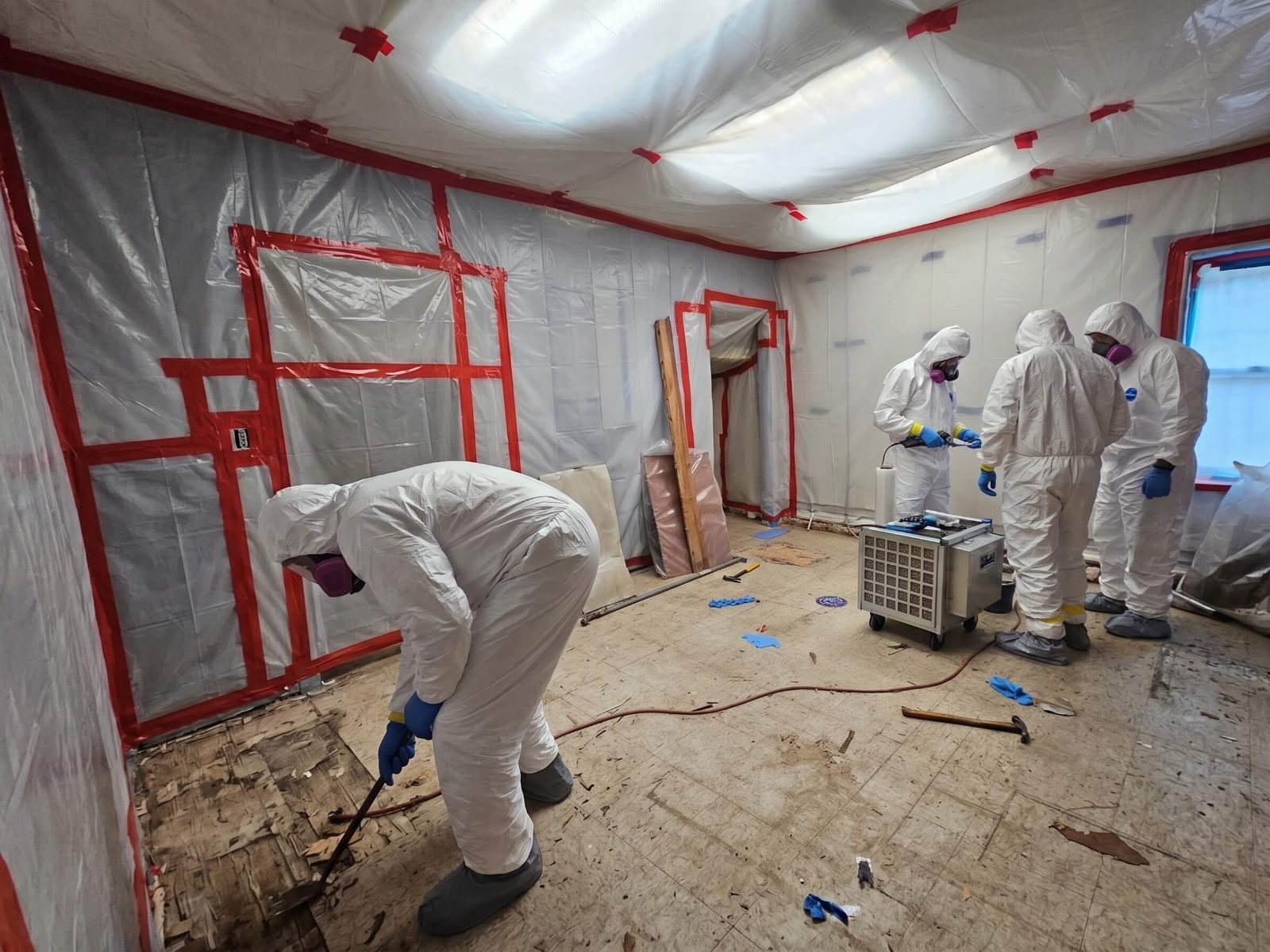
The work area is sealed off and prepared before any tile is disturbed.
Tile and, when needed, adhesive residue are removed using controlled work practices.
The work area is cleaned and left ready for new flooring or ceiling installation.