When Material Is Already Disturbed
Asbestos Remediation in Denver
Water damage, prior work, or a mid-project discovery: we contain it and get you a clear path forward. Get a Free Estimate
When Material Is Already Disturbed
Water damage, prior work, or a mid-project discovery: we contain it and get you a clear path forward. Get a Free Estimate
Remediation is what we call in when asbestos-containing material has already been disturbed, damaged, or discovered mid-project: a burst pipe that soaked old pipe wrap, debris left behind from a prior renovation, or a contractor who cut into material before anyone tested it. That's a different starting point than abatement planned around a renovation timeline, and it usually means containing the situation first, then addressing the material.
We assess what's actually been released or exposed, contain the affected area, and bring the property back to a documented, clean condition before work resumes.
The terms get used interchangeably, but there's a practical distinction. Abatement typically describes planned, proactive work: a homeowner schedules an inspection, gets material tested, and books removal or encapsulation ahead of a renovation. Remediation describes a reactive response to a situation that already exists, such as a burst pipe that soaked asbestos pipe wrap, storm or fire damage that exposed insulation, or a contractor who disturbed material before anyone realized it needed testing. Both fall under the same Colorado asbestos regulations and require the same certified handling, but remediation projects usually start with containment and damage assessment rather than a leisurely planning phase.
Signs that call for prompt remediation rather than a standard abatement quote include visible fiber release after demolition or water intrusion, debris from asbestos-containing material scattered across a work area, a home inspector or contractor flagging suspect material mid-project, or a documented asbestos exposure incident that needs cleanup and clearance testing before occupants can safely return. In these situations, a fast, properly contained response limits the spread of contamination and the scope, and cost, of the eventual cleanup.
These are the calls we get most often when asbestos becomes an active problem instead of a planning question.
A leak, flood, or fire has soaked or disturbed pipe insulation, tile, or ceiling material that likely predates 1990.
A previous owner, tenant, or contractor cut into, sanded, or removed material without testing or containment first.
A remodel already underway uncovers cracked tile, torn pipe wrap, or crumbling insulation that needs to be dealt with before work continues.
Bagged or loose material from earlier work that was never removed or documented as properly disposed of.
| Service | Estimated Cost | Average |
|---|---|---|
| Small remediation project | 1,500–4,000 | $2,750 |
| Moderate residential project | 3,000–8,000 | $5,500 |
| Multi-area remediation | 6,000–15,000+ | $10,000 |
| Complex commercial project | 10,000–30,000+ | $20,000 |
These figures are broad planning ranges only. Actual remediation costs depend on the material, affected area, accessibility, testing, containment, building conditions, project requirements, and other site-specific factors.

An active situation (water damage, disturbed material, an exposed contractor crew) needs a fast, contained response, not a multi-week planning cycle.
You get a record of what was found, what was contained, and what was cleared, useful for insurance, disclosure, or your own records.
Plumbers, restoration crews, and contractors already on-site are worked around, not shut out, so the rest of the repair keeps moving.
Not sure what to do with identified asbestos? Tell us about the property and we can discuss your options. Get a Free Estimate.
Free, no obligations
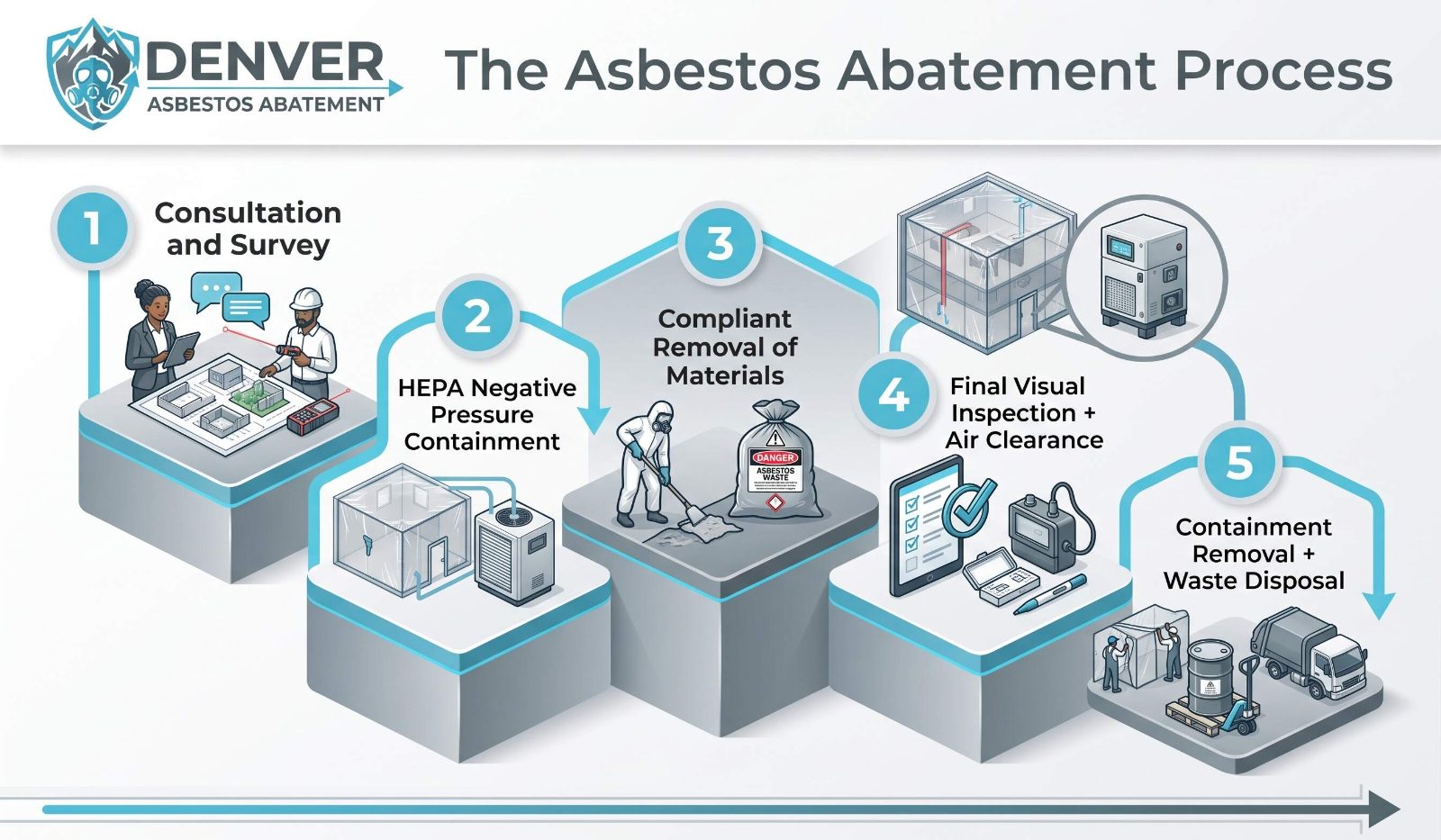
We review what is known about the material, property, and planned work.
The project scope is narrowed to the materials and areas that actually need to be addressed.
We establish the appropriate preparation, controls, work sequence, and project expectations.
The agreed scope is completed using controlled procedures appropriate to the project.
Cleanup and applicable closeout steps are completed before the area is returned to its intended use.