Cement & Transite Siding
Asbestos Siding Removal in Denver
Know what's on the exterior before it's disturbed. Get a Free Estimate
Cement & Transite Siding
Know what's on the exterior before it's disturbed. Get a Free Estimate
Homes built from roughly the 1940s through the 1980s across Denver and the Front Range often used cement-asbestos siding, sometimes called transite siding. It was installed as flat panels or as shingle-style shakes and can be difficult to tell apart from ordinary fiber-cement or wood siding just by looking at it.
Denver Asbestos Abatement helps property owners confirm what a siding material actually is before repainting, re-siding, pressure washing, or repair work disturbs it. When testing confirms asbestos content, we plan removal or encapsulation around the scope of your exterior project.
Asbestos-cement siding, commonly called transite siding, was manufactured by mixing Portland cement with asbestos fiber for reinforcement and fire resistance, then formed into flat panels or overlapping shingles. It was heavily marketed from the 1940s through the 1970s as a low-maintenance, fire-resistant alternative to wood siding, which means it shows up across nearly every era of pre-1980s Denver-area construction, from small bungalows to larger postwar homes. Because it was engineered to resemble wood clapboard or shake shingles, and because decades of paint layers can obscure its texture, transite siding is frequently misidentified as ordinary fiber-cement or wood siding until a sample is tested.
Because asbestos-cement siding is a non-friable material when intact, it generally poses low risk if left undisturbed, but cutting, breaking, pressure washing, or sanding it can release fibers, which is why Colorado and EPA rules govern its removal even though it doesn't crumble by hand. Removal typically involves careful panel-by-panel extraction to avoid breakage, wetting to suppress dust, and disposal at a facility licensed to accept asbestos-containing construction waste. Homeowners planning to re-side, repaint, or repair an older exterior should have the siding tested before starting rather than assuming it's safe because it looks intact.
Exterior cladding varies by decade and builder, so we evaluate the actual material on your property rather than assuming based on age alone.
Flat or lightly textured cement-asbestos panels installed directly over sheathing, common on mid-century Denver homes.
Individual cement-asbestos shingles installed in overlapping rows, made to resemble wood shake siding.
Old siding that needs to come off, or be safely left in place, before new siding, insulation, or trim goes up.
Cracked, broken, or deteriorating siding where fibers are more likely to be released and need prompt evaluation.
| Service | Estimated Cost | Average |
|---|---|---|
| Testing & sampling | $400–900 | $600 |
| Partial elevation removal | $2,500–6,000 | $4,000 |
| Full-home siding removal | $6,000–16,000+ | $10,500 |
| Removal plus disposal & haul-off | $1,500–4,000 | $2,500 |
Cost ranges are general planning estimates and are not guaranteed prices. Home size, siding condition, accessibility, containment requirements, and disposal distance can substantially change the final cost.
We confirm what the siding actually is rather than guessing based on the home's age.
We plan around your re-siding, painting, or repair timeline so the exterior project keeps moving.
Exterior removal is planned to control dust and debris around the work area and surrounding property.
Not sure if your siding contains asbestos? Let's start with a straightforward conversation. Get a Free Estimate.
Free, no obligations
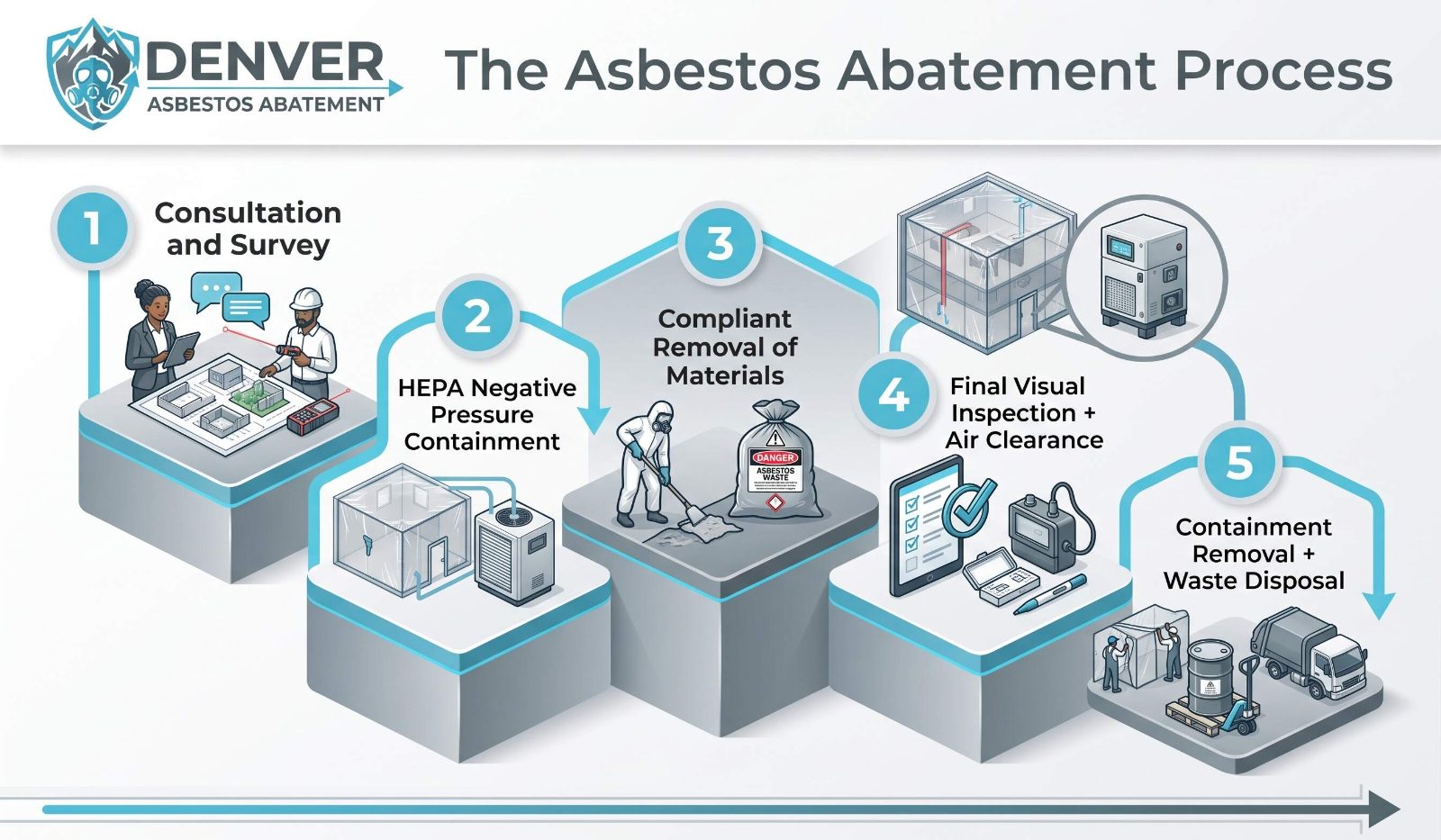
We review the material, installation style, and condition, and arrange testing to confirm asbestos content.
We map the affected elevations against your re-siding or repair plan.
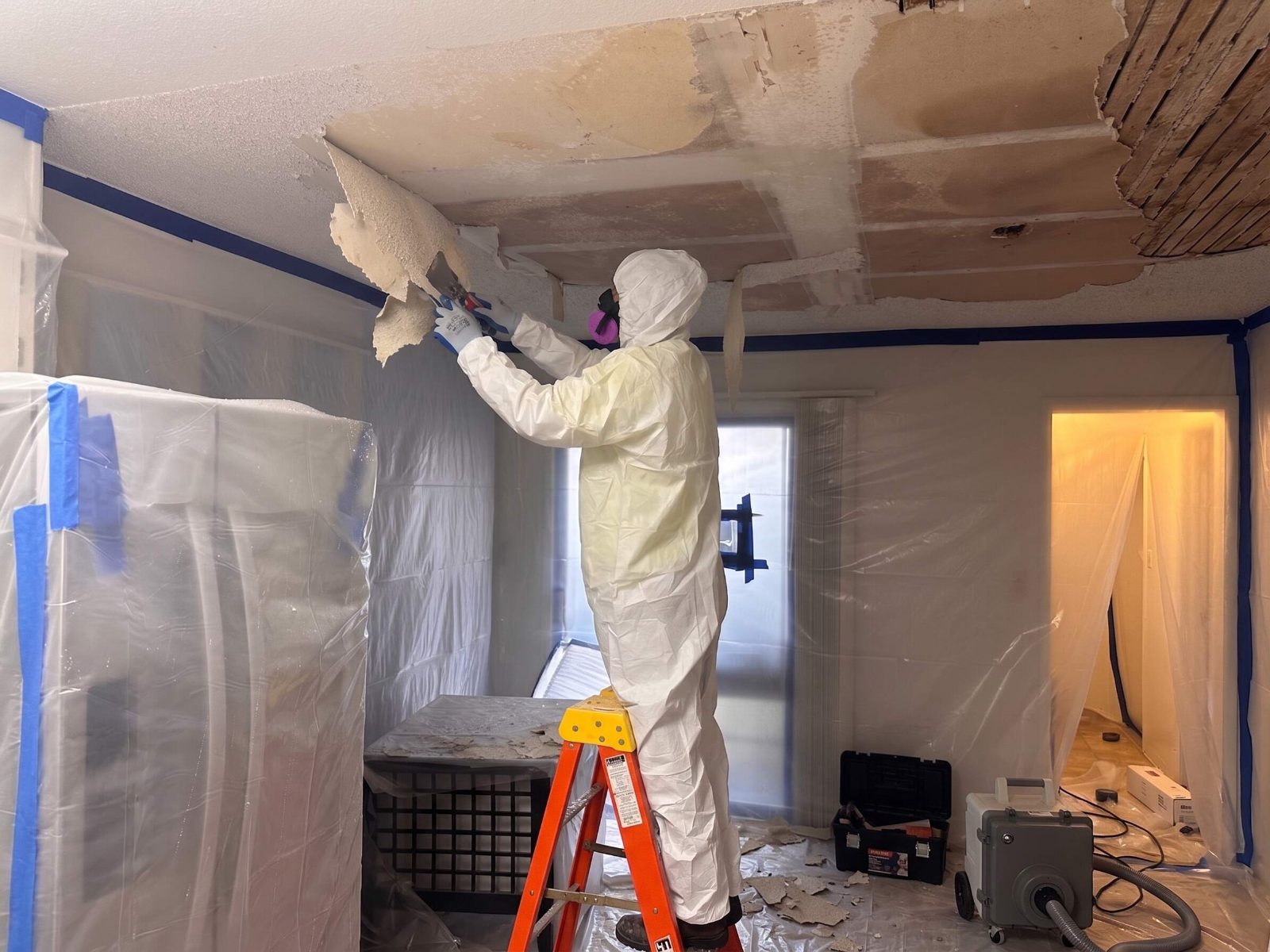
Ground coverings, containment, and access are set up before any panels are disturbed.
Panels or shingles are removed using controlled work practices suited to exterior cement-asbestos material.
Debris is contained and removed, and the work area is left ready for new siding.